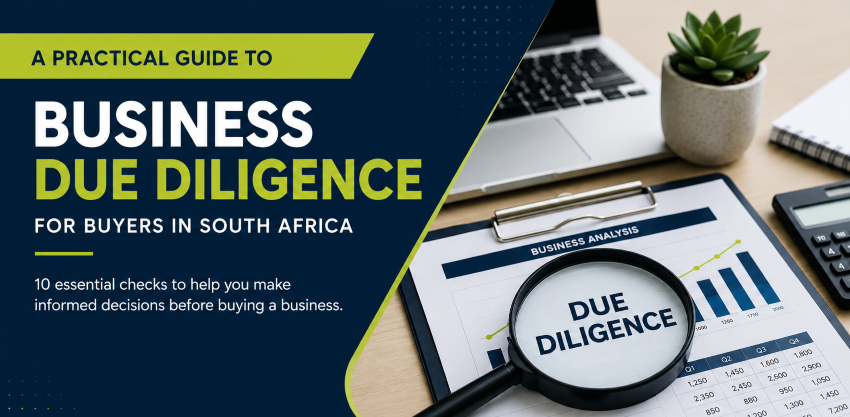
A Practical Guide to Business Due Diligence for Buyers in South Africa
Buying a business can fast-track your journey to business ownership—but only if you know exactly what you're buying. Before signing on the dotted line, it's essential to conduct thorough due diligence to uncover potential risks, verify financial performance, assess legal compliance, and ensure the asking price reflects the business's true value. In this guide, we cover the 10 essential due diligence checks every business buyer should complete to make informed decisions, minimise risk, and invest with confidence. Whether you're purchasing a retail store, franchise, manufacturing business, or service company, this checklist will help you evaluate any opportunity before you commit.
Inika Pieters
30 June 2026
Summary
Buying an existing business can be a faster way to become an entrepreneur, giving you access to an established customer base, experienced employees, supplier relationships, and proven business systems.
However, every business comes with its own opportunities and risks.
That's why conducting business due diligence is an important part of the buying process. Due diligence is the process of gathering and verifying information about a business before committing to a purchase. It helps buyers understand the business, identify potential risks, and determine whether the asking price reflects its overall value.
While no investigation can uncover every future challenge, taking the time to perform due diligence can provide greater confidence before making such a significant investment.
Here are ten key areas worth reviewing before buying a business in South Africa.
1. Review the Financial Performance
Financial records provide valuable insight into how a business has performed over time.
Where available, request two to three years of:
- Income statements
- Balance sheets
- Cash flow statements
- Management accounts
- VAT returns (where applicable)
Look for trends rather than focusing on a single year. Consistent revenue, healthy profit margins, and positive cash flow often provide a clearer picture of the business's financial health.
If audited or independently reviewed financial statements are available, they may offer additional assurance.
2. Understand the Cash Flow
A profitable business can still experience cash flow challenges.
It's worth understanding:
- How quickly customers pay
- Whether the business relies heavily on credit sales
- Seasonal income fluctuations
- Major monthly expenses
Reliable cash flow often indicates a business that is financially stable and well managed.
3. Evaluate the Customer Base
Customers are one of the business's most valuable assets.
Consider learning:
- How many active customers there are
- Whether revenue is spread across multiple customers
- If long-term customer contracts exist
- Whether the business depends heavily on a small number of clients
For confidentiality reasons, detailed customer information may only be shared later in the sales process or under a non-disclosure agreement (NDA).
4. Review Supplier Relationships
Reliable suppliers help keep a business running smoothly.
Where possible, review:
- Key suppliers
- Credit terms
- Supply agreements
- Pricing arrangements
- Alternative suppliers
Not every business has formal supplier contracts, so discussions with the seller can also provide valuable insight.
5. Examine Contracts and Leases
Contracts can affect the future owner long after the sale.
Take time to review:
- Property leases
- Customer contracts
- Supplier agreements
- Franchise agreements
- Equipment finance
- Service contracts
If the business operates from leased premises, it's worth confirming whether the lease can be transferred, as landlord approval is often required.
6. Assess the Employees
Employees often play an important role in the ongoing success of a business.
Consider reviewing:
- Employment contracts
- Organisational structure
- Staff turnover
- Key employee responsibilities
It's also useful to understand how dependent the business is on the current owner. Businesses with documented systems and experienced managers often transition more smoothly to new ownership.
Where a business is sold as a going concern, employee rights may continue under South African labour legislation.
7. Identify Assets and Liabilities
Understand exactly what is included in the sale.
Assets may include:
- Equipment
- Vehicles
- Inventory
- Intellectual property
- Websites
- Trademarks
- Customer databases
Also identify any existing liabilities, including loans, outstanding supplier accounts, tax obligations, legal disputes, or financed equipment.
Where appropriate, confirm ownership of major assets before completing the purchase.
8. Verify Legal and Regulatory Compliance
A business's compliance history can be just as important as its financial performance.
Depending on the business, it may be worthwhile confirming:
- CIPC registration and company status
- SARS Tax Compliance Status (TCS)
- VAT, PAYE and Income Tax compliance
- UIF and COIDA registration
- B-BBEE documentation (where relevant)
- Industry licences and permits
Addressing compliance matters early can help avoid unexpected costs after the acquisition.
9. Understand Why the Business Is Being Sold
One of the simplest questions can also be one of the most valuable:
"Why are you selling?"
Common reasons include retirement, relocation, health, new business opportunities, or lifestyle changes.
Understanding the seller's motivation can provide useful context and highlight areas that may warrant further investigation.
10. Review the Sale Agreement Carefully
Before signing any agreement, take time to understand the terms of the sale.
A Sale of Business Agreement typically outlines:
- What's included in the sale
- Purchase price and payment terms
- Conditions of the sale
- Warranties
- Restraint of trade clauses
- Responsibilities of both parties
Depending on the complexity of the transaction, many buyers choose to have the agreement reviewed by an attorney or other professional advisor.
Final Thoughts
Buying a business is a significant investment, and every opportunity is different.
A practical due diligence process helps buyers verify information, better understand potential risks, and make more informed decisions before proceeding with a purchase. While due diligence cannot eliminate every uncertainty, it provides a clearer understanding of the business and supports more confident decision-making.
If you're ready to explore business opportunities, browse businesses for sale across South Africa on BusinessForSale.co.za and use this guide as a practical checklist throughout your buying journey.
Author: Inika Pieters
More Buyers Knowledge Bank
Get the latest information, valuable tips and share in the professional knowledge of business experts on buying a business

The Business Behind the Business
Behind every successful business is a network of suppliers and service providers. These often-overlooked companies can offer interesting opportunities for prospective buyers.

Hire the Expertise, Not the Headcount
Growing businesses often need senior expertise without being able to justify the cost of another full-time salary. Discover how fractional specialists and consultants can provide the skills, experience and guidance you need while keeping overheads under control and profits strong.
The Agreement You Trusted, and Why It Failed You
Free contract templates and AI tools can help you get started, but they cannot replace professional legal expertise. Discover why having your business agreements drafted or reviewed by an expert can save you from costly disputes in the future.

Good Debt, Bad Debt, and the Money Sitting Idle
Not all debt is bad. Discover the difference between good debt and bad debt, and learn how smart business funding can help you grow, improve cash flow, and unlock new opportunities for your business.
What Your Numbers Say Before You Open Your Mouth
Your financial statements speak long before you do. Discover why clean, accurate financial records build buyer confidence, strengthen business value, and help ensure a smoother sale when it's time to put your business on the market.
Build a Business That Can Run Without You
A business that relies entirely on its owner is harder to grow and more difficult to sell. Learn why creating systems, empowering your team, and reducing owner dependency can increase your business's value and make it more attractive to buyers.

Businesses Under R500,000 Worth Buying in South Africa
Owning a business may be more affordable than you think. Discover the types of profitable businesses available for under R500,000 in South Africa, the benefits of buying an existing business, and the key factors to consider before making your investment.

What to Do After Buying a Business in South Africa: Your First 90 Days
Buying a business is only the beginning of your entrepreneurial journey. The first 90 days are crucial for understanding operations, building relationships with employees and customers, managing cash flow, and setting the foundation for long-term success. Learn the key steps every new business owner in South Africa should take after acquiring a business.

Business Trends in South Africa for 2026: Opportunities for Entrepreneurs and Investors
Discover the key business trends shaping South Africa in 2026 and uncover opportunities for entrepreneurs, investors, and business buyers. From artificial intelligence and online businesses to renewable energy, franchises, and recurring revenue models, explore the industries expected to drive growth and create new investment opportunities.

Franchisor and Franchisee Relationship: A Breakdown
The relationship between a franchisor and a franchisee is probably one of the most important aspects of succeeding with a franchise business. One can have a fantastic business plan and concept, but if the relationship is not strong and both parties do not invest time and effort into the relationship, it is more likely that the franchise will not be successful.
E-commerce Business for Sale: The Benefits
Whether you’re looking into buying an e-commerce business for sale because you’re passionate about building up a brand or whether you’re in it for the money, it’s still a good investment. Buying an online e-commerce business is a shortcut to entrepreneurial success compared to building your own business from the ground up. This article will discuss why buying an e-commerce business is better than building one and how much an e-commerce business will cost potential buyers.

Buying a Manufacturing Business for Sale
There are several good reasons why a manufacturer or an entrepreneur might be considering buying another manufacturing business. Acquiring a manufacturer can help you secure your supply chain or even allow you to bring product manufacturing in-house. As part of a diversification plan to develop into new markets, you can acquire a manufacturing company with a complementary or competing product to assist you in securing your customer base.

Access to the number one business broking tool to get your business sold.
We've got you covered!
We offer an innovative and intuitive
solution for selling your business, franchise and premises

Promote
your business for sale

Reach
the right audience

Gain
more exposure

Latest businesses for sale
View our latest business listings and be the first to enquire

Waterproofing and Damp-proofing business in the heart of the Garden Route. Long established
2,400,000
YNP - R 1,529,528



Established Scrapyard & Auto Spares Business
1,338,000
YNP - R 450,887

Lucrative Mobile Pet Grooming Businesss
4,350,000
YNP - R 1,371,170

AUCTION- BECOME A LANDLORD – 23 APARTMENTS. ONE INVESTMENT. ONE OWNER!
AUCTION
YNP - R 0