
What to Do After Buying a Business in South Africa: Your First 90 Days
Buying a business is only the beginning of your entrepreneurial journey. The first 90 days are crucial for understanding operations, building relationships with employees and customers, managing cash flow, and setting the foundation for long-term success. Learn the key steps every new business owner in South Africa should take after acquiring a business.
Inika Pieters
22 June 2026
Summary
Purchasing a business is one of the fastest ways to become an entrepreneur in South Africa. Unlike starting a business from scratch, buying an existing business provides immediate access to customers, systems, staff, suppliers, and established cash flow.
However, many buyers quickly discover that the real work begins after the sale agreement is signed.
The first 90 days of business ownership are often the most important. During this period, you will learn how the business truly operates, build relationships with employees and customers, and establish the foundation for future growth.
Whether you found your opportunity through BusinessForSale.co.za, a business broker, or a private transaction, these first three months can significantly influence the long-term success of your investment.
Before Taking Over the Business
Before officially taking control, ensure that all legal, financial, and operational matters have been properly addressed.
Update Company Information
If you are purchasing a company, ensure that all director and shareholder changes are correctly recorded with the Companies and Intellectual Property Commission (CIPC). Maintaining compliance with annual returns and statutory requirements is essential for keeping the company in good standing.
Review Tax Compliance
Conduct thorough due diligence regarding the company's tax affairs. Confirm that VAT, PAYE, UIF, and other tax obligations are up to date and consult with a qualified accountant regarding any outstanding liabilities.
Understand Employee Obligations
Under South African labour legislation, employees may transfer automatically when a business is sold as a going concern. Employment contracts, years of service, and employee benefits may remain intact after the transfer.
Understanding your obligations before takeover can prevent costly labour disputes later.
Confirm Licences and Permits
Certain licences and permits may need to be transferred, amended, or reissued depending on the industry. This is particularly important for businesses operating in hospitality, healthcare, manufacturing, transport, and regulated sectors.
Secure Banking and Financial Controls
Ensure banking arrangements are finalised before handover. You should also establish financial controls, signatory requirements, and reporting systems from day one.
Month One: Learn Before You Change
One of the biggest mistakes new business owners make is implementing major changes too quickly.
The first month should focus on understanding the business rather than transforming it.
Build Relationships with Employees
Your staff members possess valuable operational knowledge that may not appear in any business plan or financial statement.
Take the time to meet employees, understand their roles, and identify key team members who help keep the business running smoothly.
Creating trust early often leads to better staff retention and a smoother ownership transition.
Understand Daily Operations
Spend time observing every aspect of the business.
Learn how orders are processed, how customers are served, how inventory is managed, and where operational bottlenecks exist.
The more knowledge you gain during this period, the better your future decisions will be.
Review Cash Flow Carefully
Many businesses fail because of cash flow challenges rather than a lack of sales.
Monitor incoming revenue, supplier payments, payroll obligations, and working capital requirements closely during your first month.
Month Two: Strengthen the Foundations
By the second month, you should have a clearer understanding of the strengths and weaknesses of the business.
Meet Key Suppliers
Introduce yourself to major suppliers and confirm trading terms.
Strong supplier relationships can improve pricing, service levels, and reliability, all of which contribute directly to profitability.
Connect with Customers
Customer retention is critical after a change in ownership.
Reach out to key customers, reassure them about continuity, and demonstrate your commitment to maintaining quality products and services.
Identify Improvement Opportunities
Review processes, costs, and customer feedback to identify opportunities for improvement.
Focus on changes that produce measurable results rather than trying to fix everything at once.
Month Three: Create a Growth Plan
Once the business has stabilised, it is time to focus on future growth.
Set Clear Business Goals
Establish measurable goals for the next six to twelve months.
These may include increasing revenue, improving profitability, expanding product offerings, hiring staff, or opening additional locations.
Improve Financial Reporting
Every business owner should have access to accurate monthly financial information.
Implement accounting systems and reporting processes that provide visibility into sales, expenses, profit margins, debtors, and creditors.
Invest in Your Team
Recognise strong performers and address any performance issues professionally and legally.
A motivated team often becomes one of the most valuable assets in any business.
Common Mistakes New Business Owners Make
Many new owners experience challenges during their first 90 days. Common mistakes include:
- Making major changes too quickly
- Ignoring employee concerns
- Failing to monitor cash flow
- Neglecting customer relationships
- Overestimating immediate growth opportunities
- Not seeking professional advice
Avoiding these mistakes can significantly improve your chances of long-term success.
Final Thoughts
Buying a business in South Africa can be an excellent way to achieve financial independence and entrepreneurial success. However, the transition period requires patience, planning, and careful execution.
The most successful buyers take time to understand the business before making major changes. They focus on relationships, maintain strong financial discipline, and create a clear vision for future growth.
If you are looking for a business for sale in South Africa, BusinessForSale.co.za offers a wide range of opportunities across retail, manufacturing, services, hospitality, franchises, and more.
Browse available businesses today and take the first step toward business ownership.
Author: Inika Pieters
More Buyers Knowledge Bank
Get the latest information, valuable tips and share in the professional knowledge of business experts on buying a business

The Business Behind the Business
Behind every successful business is a network of suppliers and service providers. These often-overlooked companies can offer interesting opportunities for prospective buyers.

Hire the Expertise, Not the Headcount
Growing businesses often need senior expertise without being able to justify the cost of another full-time salary. Discover how fractional specialists and consultants can provide the skills, experience and guidance you need while keeping overheads under control and profits strong.

The Agreement You Trusted, and Why It Failed You
Free contract templates and AI tools can help you get started, but they cannot replace professional legal expertise. Discover why having your business agreements drafted or reviewed by an expert can save you from costly disputes in the future.

Good Debt, Bad Debt, and the Money Sitting Idle
Not all debt is bad. Discover the difference between good debt and bad debt, and learn how smart business funding can help you grow, improve cash flow, and unlock new opportunities for your business.

What Your Numbers Say Before You Open Your Mouth
Your financial statements speak long before you do. Discover why clean, accurate financial records build buyer confidence, strengthen business value, and help ensure a smoother sale when it's time to put your business on the market.

Build a Business That Can Run Without You
A business that relies entirely on its owner is harder to grow and more difficult to sell. Learn why creating systems, empowering your team, and reducing owner dependency can increase your business's value and make it more attractive to buyers.

Businesses Under R500,000 Worth Buying in South Africa
Owning a business may be more affordable than you think. Discover the types of profitable businesses available for under R500,000 in South Africa, the benefits of buying an existing business, and the key factors to consider before making your investment.
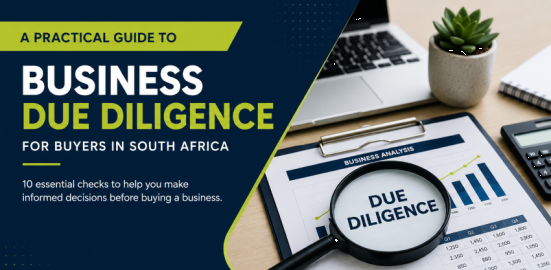
A Practical Guide to Business Due Diligence for Buyers in South Africa
Buying a business can fast-track your journey to business ownership—but only if you know exactly what you're buying. Before signing on the dotted line, it's essential to conduct thorough due diligence to uncover potential risks, verify financial performance, assess legal compliance, and ensure the asking price reflects the business's true value. In this guide, we cover the 10 essential due diligence checks every business buyer should complete to make informed decisions, minimise risk, and invest with confidence. Whether you're purchasing a retail store, franchise, manufacturing business, or service company, this checklist will help you evaluate any opportunity before you commit.

Business Trends in South Africa for 2026: Opportunities for Entrepreneurs and Investors
Discover the key business trends shaping South Africa in 2026 and uncover opportunities for entrepreneurs, investors, and business buyers. From artificial intelligence and online businesses to renewable energy, franchises, and recurring revenue models, explore the industries expected to drive growth and create new investment opportunities.

Franchisor and Franchisee Relationship: A Breakdown
The relationship between a franchisor and a franchisee is probably one of the most important aspects of succeeding with a franchise business. One can have a fantastic business plan and concept, but if the relationship is not strong and both parties do not invest time and effort into the relationship, it is more likely that the franchise will not be successful.

E-commerce Business for Sale: The Benefits
Whether you’re looking into buying an e-commerce business for sale because you’re passionate about building up a brand or whether you’re in it for the money, it’s still a good investment. Buying an online e-commerce business is a shortcut to entrepreneurial success compared to building your own business from the ground up. This article will discuss why buying an e-commerce business is better than building one and how much an e-commerce business will cost potential buyers.

Buying a Manufacturing Business for Sale
There are several good reasons why a manufacturer or an entrepreneur might be considering buying another manufacturing business. Acquiring a manufacturer can help you secure your supply chain or even allow you to bring product manufacturing in-house. As part of a diversification plan to develop into new markets, you can acquire a manufacturing company with a complementary or competing product to assist you in securing your customer base.

Access to the number one business broking tool to get your business sold.
We've got you covered!
We offer an innovative and intuitive
solution for selling your business, franchise and premises

Promote
your business for sale

Reach
the right audience

Gain
more exposure

Latest businesses for sale
View our latest business listings and be the first to enquire

George based garden services business, over 200 gardens, 4 years in trading.
382,000
YNP - R 354,246

Jozi Pub Crawl – Established Johannesburg Event & Entertainment Business
500,000
YNP - R 500,000

Specialist lingerie and post-mastectomy practise situated in the Westrand
1,250,000
YNP - R 477,802


Profitable restaurant in Port Elizabeth beach front mall tourist area, seating over 120 diners.
4,580,000
YNP - R 1,287,090

PRIME OPPORTUNITY: Two, Fully Equipped Commercial Gyms for Sale as One Profitable Entity
3,500,000
YNP - R 0

Pizza & Pasta master franchise and outlet in Northern Suburbs of Johannesburg
2,045,000
YNP - R 1,129,567