





Ref. No - BFS937836
 South Africa, Gauteng
Ref. No - BFS937836
Sector - New Franchise Opportunities
Summary
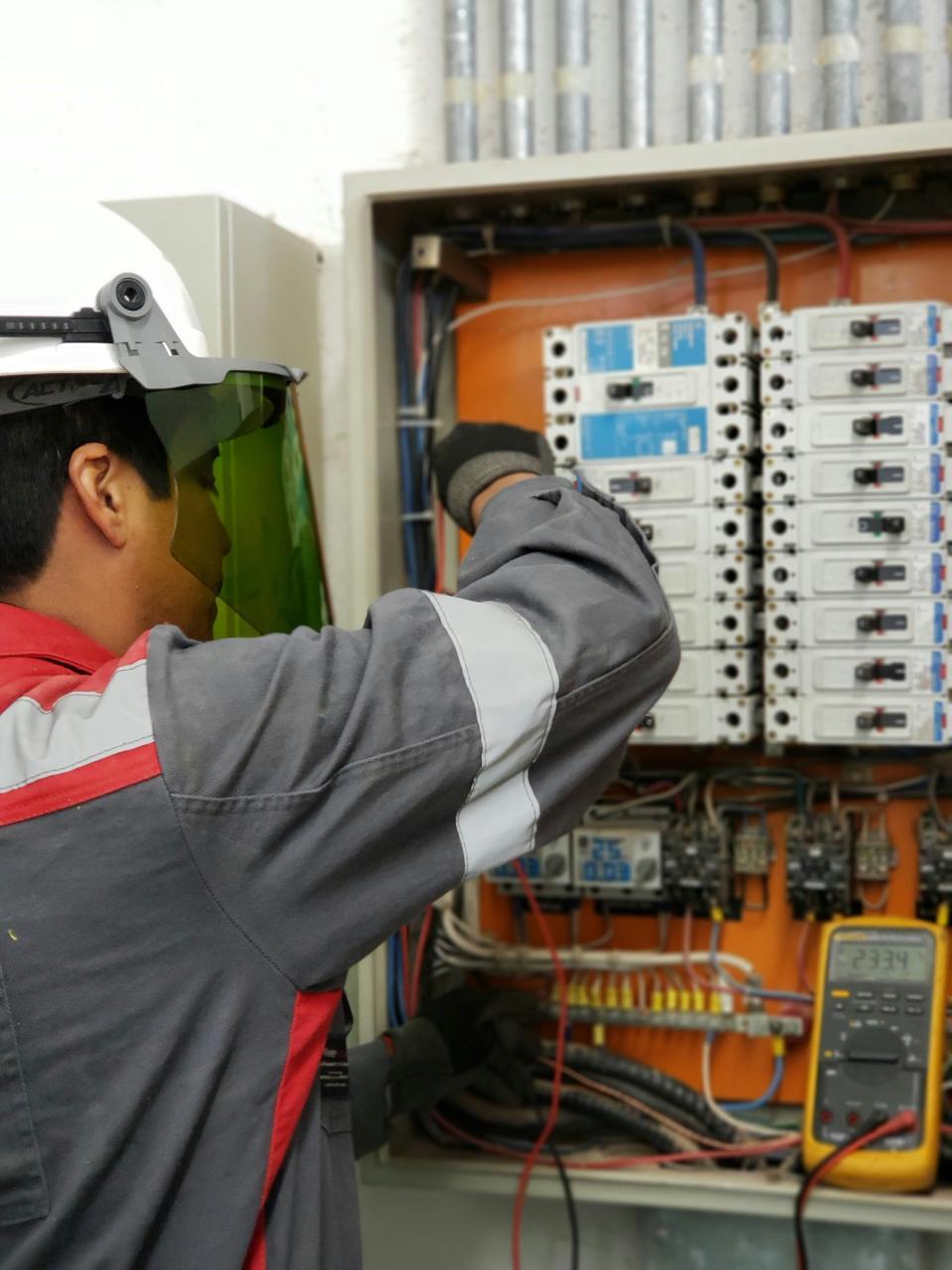
This well established electrical franchise provides buyers with a thriving business supported by a reputable nationwide brand. Enjoy reliable monthly sales, healthy profit margins, and proven business operations. Franchise owners access diverse income sources including retail and trade sales, solar solutions, delivery options, and steady commercial contracts. The package features full training, national and local marketing assistance, trusted supplier networks, and an extensive product range for both consumers and professionals. Financial forecasts indicate stable results. The sale includes inventory, fixtures, equipment, online assets, and complete franchisor support. Perfect for those seeking a scalable, recession proof investment with strong long term prospects.
Give me more informationHow long has the business been established?
What is the Franchise opportunity about?
How long has the Franchise group been establised for?
How many existing franchisees are there in the group and for how long have they been operating?
In which provinces/ areas are the existing franchisees located in?
2. Gauteng
3. Free State
4. North West
5. Limpopo
6. Mpumalanga
7. Eastern Cape
8. KZN
How does the business operate on a daily basis?
Sales consultants assist customers on the floor while trade counter staff handle bulk and project orders. The store manager oversees customer service, inventory control, supplier coordination, and daily sales reporting. Deliveries are arranged for trade clients, and stock replenishment orders are placed as required.
Administrative tasks include invoicing, cash-up procedures, and reviewing sales performance. The franchise follows standardized operating systems and reporting tools provided by Franchisor to ensure consistent customer experience, stock accuracy, and financial control.
What Advertising/Marketing is carried out?
At a national level, marketing includes:
Television and radio advertising campaigns promoting brand awareness;
Digital marketing, including social media, Google Ads, and email campaigns;
Print catalogues and product brochures distributed across all branches;
Participation in trade shows and industry expos to strengthen brand positioning.
At a local store level, marketing activities include:
In-store promotions and product launches;
Outdoor signage and vehicle branding;
Community engagement and sponsorships; and
Direct marketing to trade clients and contractors.
This integrated approach ensures consistent brand recognition while supporting each franchise’s local market growth.
Does the business have any contract work?
What competition exists?
2. Herolds
How is income derived?
Electrical equipment: Cables, switches, circuit breakers, lighting, fans, and solar products.
Bulk orders for contractors or businesses: High-volume sales to construction companies or commercial clients.
Retail sales: Direct sales to households or walk-in customers.
2. Service Fees
Delivery charges: Income from delivering products to customers (standard or express delivery).
3. Value-Added Products
Extended warranties or service contracts: Charging for maintenance or repair services beyond the initial sale.
Accessories & consumables: Smaller items like plugs, bulbs, connectors, or batteries.
4. Online/E-commerce Revenue
Website or app sales: Orders placed through online platforms may include convenience fees or premium delivery charges.
Corporate contracts: Long-term supply agreements with businesses that generate recurring income.
How does the franchise operate on a daily basis?
Staff arrive to check inventory levels, organize the warehouse, and prepare orders for the day.
Customer service and delivery systems are tested to ensure smooth operation.
Order Processing
Orders are received via in-store customers, phone, or online platforms.
Each order is verified, packed, and labeled for delivery or pickup.
Customer Service
Staff assist walk-in customers with product advice and quotations.
Queries from contractors, businesses, or retail clients are handled promptly.
Delivery & Logistics
Delivery team dispatches products to customers according to schedules.
Express orders are prioritized for fast turnaround.
Stock Management
Inventory is monitored in real-time; low-stock items are flagged for restocking.
Daily reconciliation ensures accurate tracking of sales and inventory levels.
Administrative Tasks
Daily sales and expenses are recorded.
Staff performance and operational issues are reviewed.
Closing Procedures
Cash and electronic payments are reconciled.
Deliveries for the day are reviewed, and pending orders are scheduled for the next day.
Does the Head Office assist in securing contracts (if applicable) or is it up to the individual franchisee's to do this?
What advertising and marketing is undertaken on a group basis and what is the individual franchisee expected to do?
The franchisor usually manages campaigns that benefit all franchisees, including:
Brand awareness campaigns: Nationwide advertising across social media, print media, and online platforms to build the brand.
Promotions & special offers: Seasonal or nationwide discounts coordinated by the head office.
Digital presence: Centralized website, online ordering platform, and official social media pages.
Corporate communications: Press releases, newsletters, and updates that reinforce the franchise brand.
Benefit to franchisees: They leverage a recognized brand and professional marketing materials without having to create campaigns from scratch.
2. Individual Franchisee Marketing Responsibilities
Each franchisee is expected to implement local and targeted marketing, such as:
Local advertising: Flyers, banners, local newspapers, and community boards.
Social media marketing: Maintaining a local page or profile, posting promotions, and engaging with nearby customers.
Community engagement: Sponsorship of local events, partnerships with nearby businesses, or in-store events.
Direct outreach: Calling or emailing local businesses, contractors, and construction companies to generate orders.
Goal: Drive foot traffic, increase local sales, and complement group-wide marketing initiatives.
Are there up-to-date Management Accounts available?
What percentage of the business is cash/credit?
Credit -
What is the age analysis of the debtors book?
How could the profitability of the business be improved?
Expand product range: Offer high-demand items like solar solutions, energy-efficient lighting, or smart home devices.
Upsell and cross-sell: Bundle products or offer complementary items (e.g., cables with switches, bulbs with lighting fixtures).
Target corporate/contractor clients: Establish bulk supply contracts with construction companies or commercial clients.
Online sales optimization: Improve e-commerce functionality, promotions, and delivery options to reach more customers.
2. Reduce Costs
Negotiate supplier deals: Bulk buying or long-term supplier contracts can reduce product costs.
Optimize delivery routes: Reduce fuel and labour costs by planning efficient delivery schedules.
Energy efficiency & operational savings: Reduce utility costs and waste in-store/warehouse operations.
3. Improve Operational Efficiency
Inventory management: Avoid overstocking slow-moving items and reduce capital tied up in inventory.
Staff training: Efficient staff reduce errors, improve customer service, and increase repeat business.
Marketing ROI: Focus on campaigns that deliver measurable returns rather than broad or generic advertising.
4. Explore Additional Revenue Streams
Offer installation, maintenance, or repair services for electrical products.
Introduce service contracts for recurring maintenance for commercial clients.
Is Seller finance available and for what amount?
Give a breakdown of staff/ functions/ length of service?
Admin Clerk
Sales Consultant
Cleaner
How involved is the Owner in running the business?
What are the trading hours?
What lease deposit and/or other surety is required?
What are the main assets of the business?
Inventory / Stock: Electrical products, lighting, cables, switches, solar equipment, and other electrical supplies.
Premises & Fixtures: Office, warehouse, retail space, shelving, storage racks, and display units.
Vehicles & Delivery Equipment: Delivery vans, trucks, or motorcycles used for transporting products to customers.
Tools & Equipment: Forklifts, pallet jacks, packing tools, and safety equipment.
2. Intangible Assets
Franchise Rights / Licenses: The right to operate under the Franchisor brand.
Brand Reputation: Established brand recognition and customer trust.
Digital Assets: Website, social media profiles, online ordering system, and databases of customers and suppliers.
3. Operational / Human Assets
Trained Staff: Skilled employees in sales, customer service, technical support, and delivery.
Standard Operating Procedures (SOPs): Documented processes that ensure consistent service quality and operational efficiency.
What is the reason for the sale?
Meeting growing demand: High demand for electrical products, delivery services, and contractor solutions drives the need for more local outlets.
Leveraging franchise model: Selling franchises allows the brand to expand efficiently using invested franchisees who operate local branches.
Shared success: Franchisees benefit from an established brand, operational support, and marketing while the franchisor scales without managing each location directly.
How are Projected turnovers and profits calculated?
What is the monthly royalty, management and marketing fees? Are these fees based on turnover or a flat rate?
• 4% on turnover from R0 – R1 million
• 3% on turnover from R1 million – R2 million
• 2% on turnover from R2 million – R4 million
• 1.8% on turnover above R4 million
The marketing contribution (MAP) is 0.5% of turnover, capped at R30,000 per month
What extra marketing and advertising should a franchise budget for?
Launch or grand opening promotions: Discounts or giveaways to attract first-time customers.
Seasonal or festive promotions: E.g., back-to-school, summer, or holiday campaigns.
Community sponsorships: Support local events, sports clubs, or charity initiatives to increase brand visibility.
In-store Marketing
Point-of-sale displays, product demos, and signage to upsell or cross-sell items.
What assets are included in the purchase price?
2. Shelving
3. Printers
4. Computers
5. Desks and chairs
6. Tvs
7. Kitchen furniture
Is the franchisor supplying all assets or can the franchisee source these items himself?
Is stock supplied with the initial franchise setup (if applicable?)
How many staff members are required to successfully operate the franchise?
What training is provided for new franchisees and staff members? Is there a cost associated with this?
Business Operations: How to manage daily operations, stock control, order processing, and deliveries.
Sales & Customer Service: Techniques for customer engagement, upselling, and handling enquiries.
Marketing & Promotions: Guidance on implementing both group and local marketing strategies.
Financial Management: Training on bookkeeping, cash flow management, and reporting.
Franchise Systems: Use of POS systems, inventory software, and online ordering platforms.
2. Training Provided for Staff
Product Knowledge: Detailed understanding of electrical products, lighting, cables, and solar solutions.
Customer Service & Sales Skills: Frontline staff training for assisting walk-in and online customers.
Health & Safety: Workplace safety, handling electrical products, and delivery procedures.
Operational Procedures: Warehouse management, stock handling, and delivery processes.
No cost.
What type of premises do a new franchisee require to operate the franchise?
Will the franchisor assist in identifying or acquiring premises and will assistance be provided with negotiating the lease on behalf of the franchisee?
Will upgrades to the premises be required and if so how often will this occur?
What skills and background is the franchisor looking for in a prospective franchisee?
Understanding of basic financial management, cash flow, and budgeting.
Ability to manage inventory, operations, and staff efficiently.
Sales & Customer Service Skills
Experience in sales, retail, or customer-facing roles is an advantage.
Strong communication and negotiation skills to build relationships with clients and contractors.
Management & Leadership
Experience in managing a team, scheduling, and workflow.
Ability to motivate staff and ensure high-quality service standards.
Industry Knowledge (Desirable but not always required)
Familiarity with electrical products, construction, or related industries can help, but training is provided.
Entrepreneurial Mindset
Self-motivated, goal-oriented, and capable of running the business independently.
Willingness to follow franchise systems and procedures while adapting to local market needs.
Financial Capacity
Sufficient capital to cover franchise fees, stock, operating expenses, and initial working capital.
Is there any industry regulations or licenses needed to operate the franchise?
Strengths?
Established brand reputation nationwide, providing trust and recognition.
Standardized systems and procedures ensure consistency across all franchise units.
Centralized marketing and promotions, benefiting all franchisees.
Support network for franchisees, including training, operational guidance, and supplier access.
Strong supplier relationships, enabling competitive pricing and product availability.
Weaknesses?
Dependence on franchisees for consistent execution; performance varies by location.
Limited flexibility for local marketing or operational adaptations in some areas.
High initial investment may limit potential franchisee applicants.
Operational complexity across multiple locations can strain central support resources.
Opportunities?
Expansion into underserved regions or new cities to increase market share.
Growing demand for renewable energy and energy-efficient products nationally.
Digital transformation: enhancing online sales, e-commerce platforms, and delivery services.
Partnerships with contractors, commercial clients, and large-scale construction projects.
Franchise network collaboration: sharing best practices to improve efficiency and profitability.
Threats?
Competition from other electrical wholesalers and retailers
Economic fluctuations, impacting construction and household spending.
Supply chain disruptions affecting availability and cost of electrical products.
Technological changes requiring continuous product updates and staff training.
Market saturation in certain urban areas, leading to intense local competition.
What is included in the purchase price and breakdown of various costs?
2. Initial stockholding — R1,300,000
Does the franchisor offer finance?
Do any of the Bank or Financial service providers recognises this franchise and will they offer any form of finance?
How many months working capital will the franchisee require?
How much unencumbered cash is needed from prospective franchisee?
Why has the required investment been reduced compared to previous franchisees?
Optimised Stockholding — opening stock revised down to R1.3 million, focused on high-demand categories; franchisees expand inventory based on local demand after launch.
Single Store Format — standardised on a 250m² store format, discontinuing the previous dual (standard/large) format.
Supply Chain Evolution — the franchisor's distribution centre now provides free deliveries to franchisees, fulfilling larger customer orders directly to project sites. Because this is fundamentally a trade wholesale business serving contractors and project-driven customers, this direct-to-site delivery removes the need for a large-format store and reduces the working capital tied up in stock.


Access to the number one business broking tool to get your business sold.
We've got you covered!
We offer an innovative and intuitive
solution for selling your business, franchise and premises

Promote
your business for sale

Reach
the right audience

Gain
more exposure

More businesses you may like
More similar, inspiring businesses for sale

Window Décor Business – Ready to Run
900,000
YNP - R 434,332

The Daily Coffee Café New Franchise Opportunities available in Gauteng
2,470,000
PYP - R 0
Garden Route Franchise Opportunity
500,000
YNP - R 2,028,754
Property Development Franchise. Your own Property Development Business. Countrywide.
500,000
YNP - R 2,028,754
Knowledge Bank
Get the latest information, valuable tips and share in the professional knowledge of business experts on selling or buying a business
Buyers

The Business Behind the Business
Behind every successful business is a network of suppliers and service providers. These often-overlo

Hire the Expertise, Not the Headcount
Growing businesses often need senior expertise without being able to justify the cost of another ful

The Agreement You Trusted, and Why It Failed You
Free contract templates and AI tools can help you get started, but they cannot replace professional
Sellers

Why an Accurate Business Valuation Is Essential When Selling Your Business
Thinking of selling your business? Discover why an accurate business valuation is essential for sett

What Actually Changes Hands When You Sell
What actually changes hands when you sell a business? Understand the assets, contracts, staff, premi

Not Every Offer Is a Real Offer
Not every enquiry from a potential buyer will lead to a genuine offer. Learn how sellers can identif