


Ref. No - BFS938385
 South Africa, Gauteng
Ref. No - BFS938385
Sector - Retail
Summary
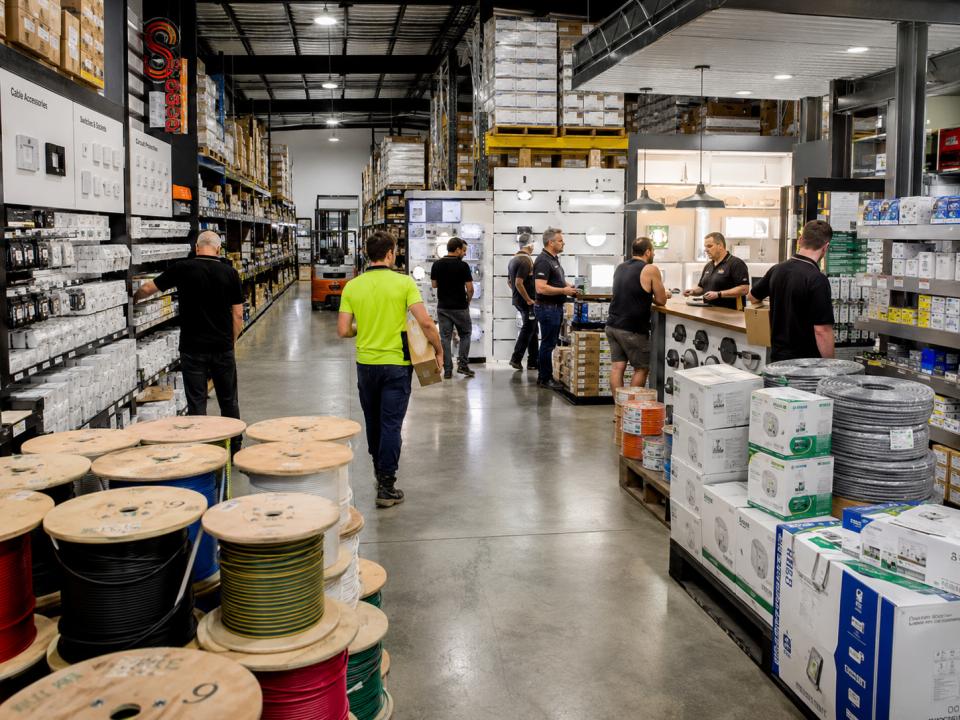
A trusted electrical and lighting wholesaler offering an extensive selection of products for trade, commercial, industrial and retail customers. With strong stock availability and an efficient distribution network, the business is equipped to support electrical contractors, construction teams, hardware retailers, industrial facilities, mining operations and public-sector clients. Orders are handled promptly, whether for everyday electrical essentials or larger project requirements. Customers benefit from competitive pricing, dependable product availability and knowledgeable assistance from a team that understands the practical demands of the electrical industry. The operation also has the capacity to service regional and cross-border markets, providing reliable supply solutions to customers beyond its immediate trading area. From cables, lighting and circuit protection to switches, sockets, distribution equipment and related accessories, the focus remains on supplying the right products with speed, professionalism and friendly service. Reliable stock. Competitive value. Electrical expertise you can depend on.
Give me more informationFully describe the business's activities?
Unlike an electrical contractor whose primary income comes from installations and labour, this wholesaler is principally a product distribution and wholesale business. It purchases electrical equipment and consumables from established manufacturers and suppliers, holds substantial quantities of stock and then supplies these products to contractors, businesses and other trade customers as required.
The product range is broad and includes, among other items:
- Electrical cable and wiring
- Low- and medium-voltage cable
- House wire and cabtyre
- Switches and sockets
- Industrial plugs and sockets
- Circuit protection and distribution equipment
- Cable accessories and cable-management products
- Electrical tools
- Test and measurement equipment
- LED and conventional lighting
- Globes, lamps and tubes
- Electrical installation accessories
- Energy-efficient electrical products
- Selected solar and energy-related products
This broad product offering is important because electrical contractors and industrial customers often prefer purchasing multiple categories from a single supplier rather than dealing with numerous specialist suppliers.
This wholesaler markets products from a number of established electrical and lighting manufacturers and brands. Its business model therefore depends substantially upon maintaining good relationships with manufacturers, importers and major distributors, obtaining competitive purchase pricing and having sufficient stock available when customers require it.
Who does the wholesaler sell to?
The customer base appears to be predominantly business-to-business and trade orientated, although retail or walk-in customers are also fairly popular.
The wholesaler has historically supplied customers including:
- Electrical contractors
- Industrial companies
- Mines
- Hardware stores
- Construction businesses
- Maintenance companies
- Municipalities
- Retail groups
- Commercial property operators
- Other electrical wholesalers or resellers
Its website has also historically referred to customers or groups such as Mica, Jack's Paint and Roshcon, although these references should be treated as historical unless confirmed through current customer records.
The Wholesaler also indicates that it undertakes cross-border sales and exports into other Southern African markets, including countries such as Botswana, Mozambique, Zambia, Zimbabwe, Angola and Eswatini.
That adds another potential revenue channel beyond the Gauteng electrical market.
How does the business operate on a daily basis?
Enquiry → Quotation → Order → Stock Picking/Procurement → Delivery/Collection → Invoice → Payment → Reordering
1. Customers contact the business
Throughout the day, customers are likely to contact Voltmaster by:
- Telephone
- WhatsApp or direct salesperson communication
- Counter/walk-in enquiries
- Repeat purchase orders
- Formal requests for quotation
A typical enquiry could be relatively small, such as an electrician needing several plugs and circuit breakers, or substantially larger, such as a contractor requesting cable and electrical equipment for an entire development or industrial project.
2. Sales staff prepare quotations
The salesperson determines:
- Product required
- Quantity
- Current stock availability
- Supplier cost
- Customer-specific pricing
- Applicable discount
- Delivery requirements
- Payment or credit terms
- A quotation is then issued.
This is an important part of the business because electrical wholesale can be highly price competitive.
Experienced salespeople therefore need to understand both the customer's requirements and the margin available on the product.
3. Existing stock is checked
If the product is already available in at the wholesaler, it can normally be allocated to the customer's order.
This is one of the business's important competitive advantages.
A well-stocked electrical wholesaler can tell a contractor:
"We have it available now."
For contractors operating against deadlines, this can be considerably more valuable than waiting several days for a cheaper alternative.
4. Products that aren't available are sourced
Where the wholesaler does not hold sufficient stock, purchasing staff would obtain the product from:
- Manufacturers
- Importers
- Master distributors
- Other electrical suppliers
Because the company has traded for many years, supplier relationships and negotiated buying terms represent an important component of the business.
5. Orders are picked and prepared
Once an order is accepted, warehouse personnel would typically:
- Receive the sales order
- Locate the relevant products
- Pick the required quantities
- Check the order
- Package it
- Prepare it for customer collection or delivery
Stock control is particularly important because a wholesaler may carry hundreds or thousands of different stock-keeping units.
6. Customers collect or Voltmaster delivers
Products may then either be:
- Collected from Voltmaster's Bedfordview premises; or
- Delivered to the customer's premises or project site.
7. Customers are invoiced
Customers broadly fall into two categories:
- Cash/COD customers: Payment takes place before or when the goods are supplied.
- Account customers: Established customers may have credit facilities and pay within agreed terms, such as 30 days. Credit management is therefore an important part of the business.
A wholesaler may appear highly profitable while experiencing cash-flow pressure if too much money is tied up in debtors.
8. Stock levels are continually replenished
Purchasing staff monitor:
- Fast-moving products
- Minimum stock quantities
- Large confirmed orders
- Supplier lead times
- Current purchasing prices
- Customer demand
- Seasonal or project-related demand
- Orders are then placed with suppliers.
- Good stock management is fundamental.
- Too little stock results in lost sales.
- Too much stock ties up capital and creates obsolete inventory.
9. Supplier accounts are managed
Electrical wholesalers generally purchase substantial quantities on supplier credit.
Management therefore needs to continually manage:
- Supplier statements
- Credit limits
- Payment terms
- Early-payment discounts
- Volume rebates
- Purchase discounts
- Special pricing
- Foreign exchange where imported products are involved
10. Management oversees pricing and margins
Management would regularly monitor the difference between:
- Selling price − Product cost = Gross Profit
- Certain products may generate relatively small margins but significant volume, while more specialised products may generate better margins.
- The objective is therefore not simply to maximise turnover but to maintain an appropriate gross-profit percentage and stock turn.
What competition exists?
Do any have management potential?
How involved is the Owner in running the business?
When does the current lease end?
What are the trading hours?
Saturday - 08h00 to 12h00
Closed on Public Holidays
What are the main assets of the business?
Furniture & Fittings
IT Equipment
Inventory
Strengths?
The wholesaler has operated since 1988. A business that has survived multiple economic cycles over several decades has demonstrated considerable resilience.
For a purchaser, this provides substantially more comfort than acquiring a relatively new electrical wholesaler without a trading history.
2. Established name and reputation
After decades in the industry, the wholesaler has had considerable time to establish relationships with:
- Contractors
- Suppliers
- Manufacturers
- Industrial clients
- Hardware businesses
- Other trade customers
This goodwill would take a new entrant many years to replicate.
3. Broad product range
Customers can obtain numerous electrical products through one supplier.
This encourages repeat purchasing and makes the wholesaler more useful to contractors.
4. Recurring-demand industry
Electrical products are continually required for:
- Maintenance
- Repairs
- Construction
- Infrastructure
- Industrial operations
- Mining
- Property development
- Refurbishments
- Energy projects
Demand therefore does not depend entirely upon discretionary consumer spending.
5. Significant stockholding
An established wholesaler's ability to supply products immediately represents a competitive advantage.
It is particularly valuable where customers cannot afford project delays.
6. Established supplier relationships
Long-standing supplier accounts may provide the business with:
- Preferential pricing
- Credit facilities
- Volume discounts
- Rebates
- Priority stock access
These relationships can be difficult for a new entrant to obtain immediately.
7. Diverse customer base
This wholesaler is not positioned exclusively in one niche.
Its potential markets include commercial, residential, industrial, mining, retail and public-sector customers.
8. Export potential
Existing experience selling into Southern Africa provides an additional avenue for expansion.
9. Strategic Gauteng location
Bedfordview places the business close to Johannesburg, Germiston, Edenvale and the wider Ekurhuleni industrial area and provides good access to Gauteng's main transport networks.
10. Independent operation
Being independent may enable Voltmaster to respond faster on:
- Pricing
- Product sourcing
- Customer negotiations
- Credit decisions
- Special orders
than a heavily corporateised competitor.
Weaknesses?
Electrical wholesaling can require substantial capital.
Cash may be tied up in:
- Inventory
- Customer debtors
- Deposits
- Imported products
2. Potentially large stockholding
Inventory is both a strength and a potential weakness.
Stock may include:
- Slow-moving products
- Obsolete technology
- Damaged products
- Excess quantities
- Discontinued lines
The stock should therefore be independently counted and valued during due diligence.
3. Relatively limited digital presence
The existing website appears more like a catalogue/information site than a sophisticated modern e-commerce operation.
This potentially leaves online sales opportunities underdeveloped.
4. Credit risk
Contractors and commercial customers frequently operate on account.
Poor debtor management can create:
- Bad debts
- Cash-flow problems
- Long collection periods
5. Margin sensitivity
Electrical wholesaling can be highly competitive.
Customers frequently request quotations from several wholesalers, putting pressure on margins.
Opportunities?
One of the clearest opportunities would be developing a modern online electrical marketplace where customers can:
- View products
- Check availability
- Request quotations
- Place orders
- Download invoices
- Repeat previous orders
- Pay online
This could dramatically increase the company's geographic reach.
2. Solar and alternative-energy products
South Africa's energy market presents potential opportunities in products such as:
- Solar panels
- Inverters
- Batteries
- Surge protection
- Energy-management equipment
- Backup-power accessories
A traditional electrical wholesaler already has many of the required customer relationships.
3. Expand contractor accounts
A purchaser could actively target:
- Electrical contractors
- Solar installers
- Property developers
- Facilities-management companies
- Industrial maintenance companies
4. Geographic expansion
The established brand could potentially support additional branches in strategic locations such as:
- Pretoria
- East Rand
- Midrand
- West Rand
- Mpumalanga
5. Expand exports
The existing export experience creates an opportunity to develop formal distribution relationships throughout Southern Africa.
6. Increase direct digital marketing
Online advertising, LinkedIn, Google marketing and contractor databases could generate additional B2B enquiries.
7. Private-label products
Certain high-volume electrical accessories could potentially be imported or manufactured under the wholesaler-owned brand, increasing gross margins.
8. Acquire competitors
A well-capitalised buyer could potentially use the wholesaler as a platform to acquire smaller independent electrical wholesalers.
Threats?
The Wholesaler operates against substantially larger groups with significant purchasing power.
2. Price competition
Electrical products can sometimes be relatively commoditised.
Customers may compare quotations and choose primarily on price.
3. Exchange-rate volatility
Imported electrical products can be significantly affected by changes in the rand.
4. Copper and commodity pricing
Cable pricing can fluctuate considerably because of movements in copper and aluminium prices.
5. Construction-sector conditions
A slowdown in building activity could reduce demand from contractors and developers.
6. Bad debts
Failure by a large contractor or customer could result in material losses.
7. Supplier dependency
Losing an important distributorship or supplier account could affect product availability and margins.
8. Technological obsolescence
Lighting, renewable-energy and control technologies continue to change rapidly, creating stock-obsolescence risk.
9. Economic conditions
High interest rates, weak construction activity or reduced capital expenditure could negatively affect volumes.
What is the reason for the sale?


Access to the number one business broking tool to get your business sold.
We've got you covered!
We offer an innovative and intuitive
solution for selling your business, franchise and premises

Promote
your business for sale

Reach
the right audience

Gain
more exposure

More businesses you may like
More similar, inspiring businesses for sale

Turnkey Baby Boutique with Established Distribution and Multi‑Channel Retail Presence.
9,550,000
YNP - R 3,363,397

Wiggle Wear – Established Baby Diaper Wholesale Business for Sale
650,000
YNP - R 0
Well-known, Well-established Construction and Builders Merchant & Hardware. Northern Suburbs.
6,000,000
YNP - R 1,245,582

Established Tyre & Wheel Centre – R4.5 Million Stock Included at a Fraction of Cost
2,200,000
YNP - R 486,000
Knowledge Bank
Get the latest information, valuable tips and share in the professional knowledge of business experts on selling or buying a business
Buyers

The Business Behind the Business
Behind every successful business is a network of suppliers and service providers. These often-overlo

Hire the Expertise, Not the Headcount
Growing businesses often need senior expertise without being able to justify the cost of another ful

The Agreement You Trusted, and Why It Failed You
Free contract templates and AI tools can help you get started, but they cannot replace professional
Sellers

What Actually Changes Hands When You Sell
What actually changes hands when you sell a business? Understand the assets, contracts, staff, premi

Not Every Offer Is a Real Offer
Not every enquiry from a potential buyer will lead to a genuine offer. Learn how sellers can identif

The Price Is Not the Deal
When selling a business, the price is only part of the deal. Payment timing, earn-outs, seller finan